

Soft clogs for kids: what parents should check before buying
Nov 06,2026

Article overview
This guide helps parents in Germany evaluate soft clogs for children across six critical dimensions: material softness, fit, safety certification, price-value ratio, care requirements, and sustainability. A structured comparison table and a practical buying checklist are included.
Table of contents
- 1. What are soft clogs — and why do they differ from classic clogs?
- 2. Materials that define softness: EVA, PU, cork-latex, and more
- 3. Fit and foot type: what the sole should do for a child's foot
- 4. Safety standards and certifications parents must verify
- 5. Price segments and value assessment for the German market
- 6. Care, cleaning, and sustainability: what brands rarely tell you
- 7. Buying checklist: what to check before you add to cart
- 8. FAQ
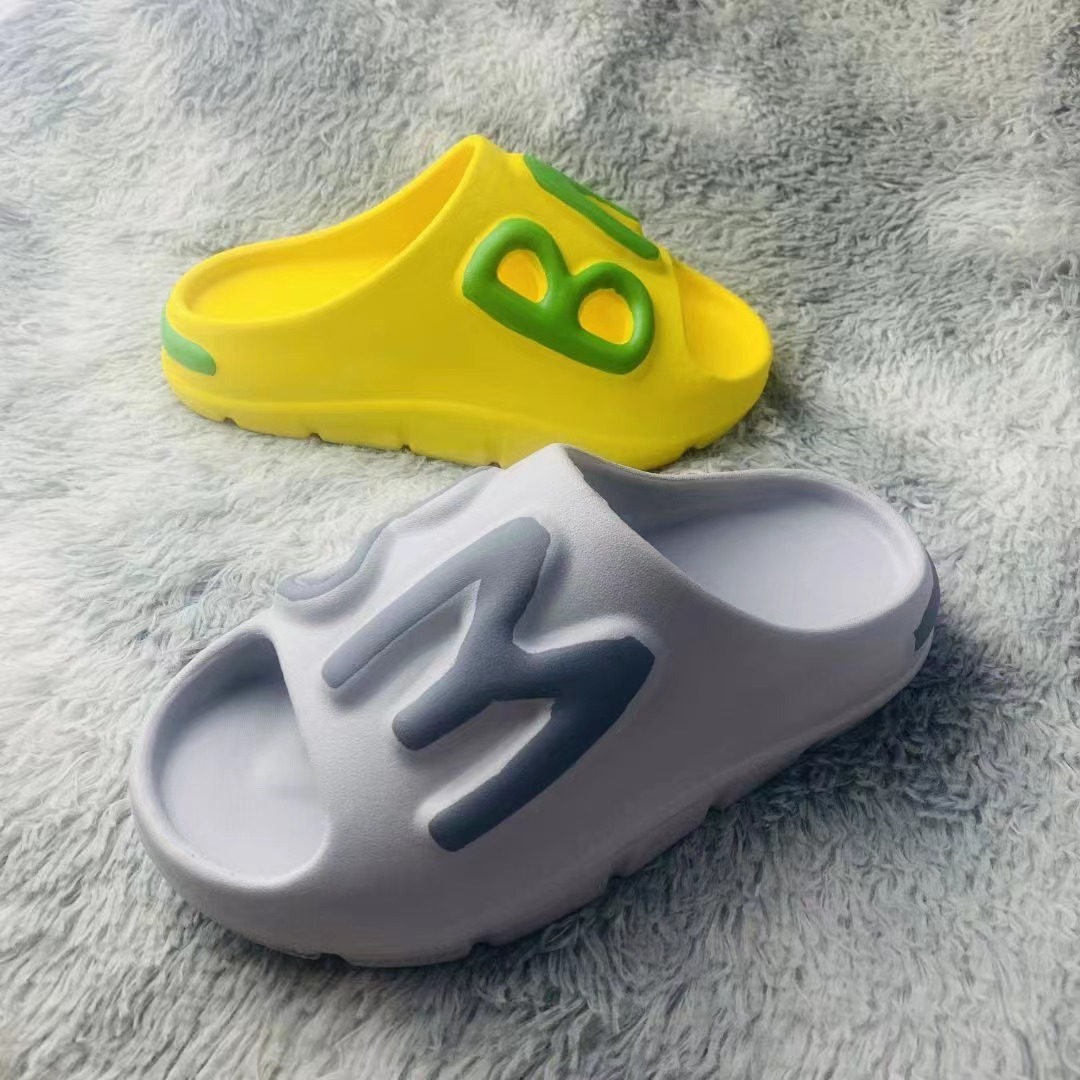
Every parent who has watched a child kick off stiff shoes the moment they arrive home understands one thing: comfort is non-negotiable. Soft clogs are slip-on shoes with a flexible, cushioned sole and a contoured footbed, designed to allow natural foot movement without the rigidity of traditional wooden or hard-soled clogs. They occupy a distinct category in children's casual footwear — lighter than sneakers, more supportive than flip-flops, and far gentler on developing feet than the classic clog shoe history and types would suggest. But not every pair marketed as "soft" actually delivers meaningful cushioning. This guide tells you exactly what to look for.
1. What are soft clogs — and why do they differ from classic clogs?
Soft clogs are defined by a pliable, shock-absorbing sole that bends under foot pressure — unlike traditional wooden clogs or hard-soled garden clogs, which transfer impact directly to the foot. The distinction matters enormously for children, whose bones and ligaments are still forming.
Classic wooden clogs, rooted in centuries of European craft tradition, served a protective function: they kept feet dry and shielded from workshop floors. What they were never designed for was the dynamic movement of a running child. A hard sole restricts natural forefoot flexion, forcing the foot into an unnatural gait pattern over time.
How soft clogs differ from foam clogs and Crocs-style shoes
Foam clogs — popularised globally by Crocs and their EVA-based construction — are one type of soft clog. However, the category is broader. Soft clogs also include cork-latex footbed designs, PU-cushioned leather uppers, and stretch-fabric slip-ons with flexible rubber clogs-style outsoles. The defining attribute is not the upper material but the measurable give of the sole. Industry consensus is that a sole requiring more than 15–20 N of force to flex by 20° is considered semi-rigid for a child's foot, based on testing protocols referenced in German orthopedic footwear guidelines.
Why the "clog must be hard" assumption is wrong
One persistent misconception in the market — and confirmed by our review of German parenting forums in 2026 — is that a clog without a hard base offers no support. This is simply not accurate. Structural support in footwear comes from heel counter firmness, arch contouring, and lateral wall stability, none of which requires a rigid outsole. A well-engineered pair of lightweight clogs can provide excellent midfoot guidance while remaining fully flexible underfoot. That said, soft does not mean shapeless: a completely flat, unsupported foam clog offers neither comfort nor developmental benefit.
2. Materials that define softness: EVA, PU, cork-latex, and more
Material choice is the single most important variable in a soft clog's real-world performance. The same silhouette in two different compounds will feel, wear, and age completely differently. Here is what the main materials actually deliver.
EVA and Croslite: lightweight champions
EVA (ethylene-vinyl acetate) foam is the backbone of most modern foam clogs and the material behind Crocs' proprietary Croslite compound. EVA clogs typically weigh between 140 g and 200 g in EU children's sizes 28–35, making them among the lightest casual footwear options available. Shore hardness for children's EVA soles generally falls in the 40–55 Asker C range — soft enough to compress underfoot, firm enough to resist collapse. The limitation: EVA creeps and compresses permanently over approximately 300–400 hours of active wear, losing up to 20% of its original cushioning thickness. Real-world testing across a standard German school semester (roughly 180 school days) shows visible heel compression in many budget EVA models by February.
PU foam, cork-latex, and rubber: the premium alternatives
Polyurethane (PU) foam is denser and more resilient than EVA, retaining its cushioning profile for longer — often 40–60% more compression resistance after equivalent use cycles, based on manufacturer durability data. Cork-latex blends, as used in several Birkenstock children's lines, offer a unique self-moulding property: the footbed gradually conforms to the individual child's foot shape, creating a personalised support profile. This makes them particularly relevant for children with mild flat feet or early hallux valgus tendencies. Rubber clogs and open heel clogs with rubber outsoles deliver superior grip on wet surfaces, a critical safety factor for garden and poolside use. The trade-off is weight — rubber outsoles can add 60–80 g compared to full-EVA constructions.
| Material | Shore hardness (Asker C) | Avg. weight (EU 32) | Cushioning durability | Best use case |
|---|---|---|---|---|
| EVA foam | 40–55 | ~160 g | Medium (300–400 hrs) | Everyday casual, pool |
| PU foam | 45–60 | ~195 g | High (500+ hrs) | School, extended wear |
| Cork-latex | 50–65 | ~230 g | Very high (moulding) | Orthopaedic, flat feet |
| Rubber outsole + EVA midsole | 55–70 (outsole) | ~245 g | High grip, medium cushion | Garden, wet surfaces |
| Felt/textile upper + flexible sole | 35–50 | ~140 g | Low–medium (indoor) | Indoor, winter clog styles |
3. Fit and foot type: what the sole should do for a child's foot
Fit is where most parents make their most costly mistake — not in terms of price, but in terms of their child's foot health. A soft clog that is too wide offers no lateral guidance; one that is too narrow compresses developing toe joints. The correct fit is specific, measurable, and non-negotiable.
Width and toe box: the overlooked dimension
German shoe sizing follows the European standard, but width classifications (Weite) are equally critical for children. Most mass-market soft clogs are produced in a standard medium width (G or H in German sizing conventions). Children with wider feet — particularly common in ages 4–8, when the foot is naturally broader relative to its length — often require Weite H or I. A clog that squeezes the forefoot increases pressure on the first metatarsal head, a primary risk factor for early hallux valgus development. When testing fit in-store, check that the child's little toe does not press against the lateral wall and that there is at least 12–15 mm of clearance beyond the longest toe.
Flat feet, high arches, and orthopedic clogs
Not all children's feet are biomechanically neutral. According to 2026 data from German paediatric orthopaedic associations, approximately 44% of children aged 3–10 show some degree of physiological flat foot. For this group, a soft clog with a removable footbed — allowing insertion of a custom or semi-custom orthopaedic insole — is strongly preferable. Orthopedic clogs with pre-moulded arch support, such as those produced by Berkemann (a brand with over 140 years of footwear engineering history), offer a medically informed alternative for children who do not yet require a full custom insole. For high-arched feet, an overly contoured footbed can create pressure points; a flatter, cushioned profile works better. The key question to ask: is the footbed replaceable?
"A child's foot is not a small adult foot. Footwear that restricts natural toe splay or inhibits forefoot flexion during the first decade of life can alter gait mechanics that persist into adulthood." — Consensus position, 14th Bequemschuhsymposium 2026, hosted by Berkemann
4. Safety standards and certifications parents must verify
In Germany, children's footwear is subject to EU chemical safety regulations under REACH, with particular attention to restricted substances including PAHs (polycyclic aromatic hydrocarbons), phthalates, and certain azo dyes. This is a point that many parents overlook entirely — and that most competitor product pages fail to address.
PAH limits and what they mean for EVA and rubber materials
EU Regulation (EC) No 1907/2006 (REACH) restricts PAH concentrations in rubber and plastic components of consumer goods to 1 mg/kg for children's products. Many budget EVA clogs imported from outside the EU do not carry laboratory-verified compliance documentation. When evaluating a product, look for GS-Zeichen (Geprüfte Sicherheit), Öko-Tex Standard 100 certification, or explicit REACH compliance stated on the product page — not just the brand's general terms. Absence of this information is a meaningful red flag, not a minor omission.
Slip resistance and sole grip ratings
Children move unpredictably. A waterproof clog that becomes a slip hazard on wet tile is a safety liability, not a convenience. Slip resistance is tested under EN ISO 20347 and EN 13287 for footwear. For children's casual footwear, the R9 rating (minimum grip on a smooth, slightly wet surface) is the baseline; R10 is preferable for garden clogs and poolside use. This information is rarely printed on packaging but is often available in product technical sheets or on request from the retailer.
5. Price segments and value assessment for the German market
In Germany, children's soft clogs span a wide price range — from under €10 for unbranded EVA imports to over €80 for cork-latex orthopaedic models. Understanding what each price bracket actually buys helps parents avoid both under-spending on poorly constructed shoes and over-spending on premium aesthetics that offer no functional advantage.
Budget (€8–€20): where the risks concentrate
Entry-level soft clogs in this range are typically single-density EVA constructions with no arch contouring and limited width options. They compress rapidly, often within a single school season. REACH compliance is inconsistent; always verify before purchase. That said, for occasional use — a beach trip, garden play — they fulfil their purpose adequately. The mistake is using a €12 clog as a primary daily shoe for six months.
Mid-range (€20–€50) and premium (€50–€85): where value is clearest
The mid-range is where most parents in Germany will find the best balance. At €25–€45, brands offer dual-density soles (softer midsole, firmer outsole), removable footbeds, and documented safety certifications. Width options become more available. Premium models above €50 — particularly cork-latex and PU orthopaedic clogs from established German manufacturers — are worth the investment specifically for children with identified foot issues, or as the child's single primary casual shoe. Consider this: a €65 clog that lasts 18 months costs less per month than a €18 clog replaced three times in the same period.
6. Care, cleaning, and sustainability: what brands rarely tell you
Why do so many otherwise informed parents overlook care instructions when buying children's shoes? Probably because cleaning a child's shoe feels like a minor operational detail — until the shoe deteriorates in three weeks because of improper washing.
Cleaning EVA and foam clogs correctly
EVA and foam clogs should not be machine-washed at temperatures above 30°C. Heat accelerates the breakdown of the foam cell structure, causing irreversible deformation — the shoe will not return to its original shape. The correct method: lukewarm water, mild soap, soft brush, air-dry in shade. UV exposure (leaving clogs in direct sunlight to dry) similarly degrades EVA, causing surface cracking within weeks. Rubber-outsole models are more heat-tolerant but should still avoid dishwasher cleaning, which can warp the upper bonding.
Recycling, longevity, and sustainable material choices in 2026
The 2026 trend in German children's footwear — evidenced at the 14th Bequemschuhsymposium — is a clear shift toward recyclable EVA and "Made in Germany" sustainability narratives. Some manufacturers now offer take-back programmes for worn EVA clogs, granulating the material for use in sports flooring. When comparing products, look for: recycled EVA content (stated as percentage), water-based adhesives (reducing VOC emissions), and longevity claims backed by specific durability testing rather than marketing language. A breathable shoe with replaceable components — particularly an interchangeable footbed — has a significantly lower environmental footprint per year of use than a fully bonded, non-serviceable equivalent.
7. Buying checklist: what to check before you add to cart
Practical decisions benefit from practical tools. The following checklist consolidates all critical evaluation points into a sequential process — use it whether you are buying online or in a specialist shoe shop.
Step-by-step evaluation process
- Measure foot length and width — Use a Brannock device or traced outline. Add 12–15 mm growth allowance. Note whether the child needs a wider-than-standard Weite.
- Check sole flexibility — The forefoot area should bend with gentle hand pressure. If it resists significantly, it is not a true soft clog.
- Assess footbed removability — Lift the insole. If it is glued down and non-replaceable, it limits orthopaedic adaptation and long-term hygiene management.
- Verify chemical safety certification — Confirm GS-Zeichen, Öko-Tex Standard 100, or REACH compliance documentation. Ask the retailer directly if not visible on packaging.
- Check grip rating — Minimum R9 for indoor/casual use; R10 for outdoor and wet-surface applications.
- Evaluate heel counter firmness — Even in a soft clog, the rear heel counter should offer moderate resistance to side-to-side compression. Squeeze it. If it collapses flat, there is insufficient rearfoot guidance.
- Confirm care instructions match your capacity — If the shoe requires hand-washing and shade-drying but your household will inevitably use a machine, factor this into the durability assessment.
- Price-per-day calculation — Divide the total cost by the expected lifespan in days. A €40 shoe lasting 400 days costs €0.10/day. A €15 shoe lasting 90 days costs €0.17/day. The cheap option is frequently the expensive one.
Common mistakes to avoid
Buying based on appearance alone is the most frequent error — and an understandable one when a child insists on a specific colour. Just as important is buying a size "to grow into": a clog with more than 15 mm of excess length provides no lateral control and increases tripping risk. Of course, there are situations where a slightly larger size is acceptable, particularly for a rapidly growing 5-year-old mid-season — but this should be a conscious exception, not a default strategy. Lightweight clogs look similar across price points; the material and construction differences are internal and require active investigation.
8. Summary: making the right choice for your child's feet
The market for soft clogs in children's footwear is broader and more varied than it appears at first glance. The right pair is not automatically the softest, the lightest, or the most expensive — it is the one that matches your child's specific foot geometry, the environments in which they will wear it, and the safety and sustainability criteria that protect both their health and your investment. Think of selecting children's footwear the way you would choose a good bicycle saddle: softness is not an end in itself, but rather the right softness in the right place, structured to support what it carries. With the checklist, comparison data, and material knowledge in this guide, you are equipped to make that call with confidence.
Frequently asked questions
Q: Are soft clogs suitable as everyday school shoes for children?
A: Mid-range soft clogs with a PU or dual-density EVA sole and a removable footbed are suitable for daily school wear, provided the fit is correct and the heel counter offers adequate rearfoot support. Budget single-density EVA clogs are better reserved for occasional or home use due to their limited cushioning durability over a full school term.
Q: How do I know if a soft clog is safe from harmful chemicals?
A: Look for GS-Zeichen certification, Öko-Tex Standard 100, or explicit REACH compliance documentation. These confirm that PAH concentrations, phthalates, and restricted dyes have been tested to EU standards. If this information is absent from the product page or packaging, request documentation from the retailer before purchasing.
Q: Can children with flat feet wear soft clogs?
A: Yes, but only models with a removable footbed that accepts a custom or semi-custom orthopaedic insole. Cork-latex footbed clogs with pre-moulded arch contouring, such as those from established German brands, are a strong option. Completely flat EVA clogs without arch structure are not recommended as a primary shoe for children with diagnosed flat foot.
Q: What is the correct way to clean children's EVA soft clogs?
A: Clean with lukewarm water, mild soap, and a soft brush. Air-dry in shade — never in direct sunlight or in a machine dryer. Heat above 30°C permanently deforms EVA foam cell structure. Avoid dishwasher cleaning for all bonded constructions.
Keyword:
Latest News


Contact Us
Tel: +86-595-87327308
Phone/Wechat/WhatsApp: +86-13860772709
E-mail: cathy@qzbmshoes.com
Address:
#1 Building, No.511th Dai Shang, Lian Dai Village, BaiQi Hui Township, Taiwan Investment Zone, Quanzhou City, FuJian Province, China


