

How clogs for women differ by brand, material, and intended use
Nov 17,2026

Article overview
This guide covers how clogs für damen differ by brand positioning, sole material, upper construction, foot-type compatibility, and professional use case. It includes a sizing comparison table, a material property table, a foot-type matching guide, and care instructions for cork, suede, and leather uppers.
Table of contents
- 1. What makes women's clogs different from other slip-on shoes
- 2. How material determines comfort, weight, and durability
- 3. Matching clogs to foot type: a compatibility guide
- 4. Cross-brand sizing and fit reality
- 5. Intended use scenarios: nursing, garden, kitchen, and casual
- 6. Sustainability, material safety, and repairability
- 7. Care, waterproofing, and seasonal use
- 8. Frequently asked questions
What makes women's clogs different from other slip-on shoes
Clogs für damen are slip-on shoes with a rigid or semi-rigid sole — traditionally wooden, now also foam or rubber — and an open or closed heel that elevates the foot on a structured base. This construction is fundamentally different from a mule, a sandal, or a loafer, even though visual overlap exists across all four categories.
The rigid sole is the defining characteristic. It limits natural foot flexion during the toe-off phase of walking, which shifts load distribution toward the heel and midfoot. For professions that involve prolonged standing on hard surfaces — think hospital corridors, commercial kitchens, or workshop floors — this load redistribution is a clinical advantage, not a stylistic quirk. According to the history of clogs, this footwear category has served functional working roles for centuries across Europe, particularly in regions with wet or hard-surfaced work environments.
What complicates buying decisions in 2026 is that the category now spans an enormous range: from orthopedic comfort clogs with contoured footbeds and rocker soles, to fashion-forward platform clogs with a 6 cm heel, to lightweight foam clogs designed for single-use hospital environments. The word "clog" covers all of these — which is precisely why brand, material, and intended use must be evaluated together.
Why the heel design matters more than most buyers realize
Open-heel clogs (the classic ladies clogs silhouette) allow the foot to slide slightly during the stride, which reduces energy transfer efficiency but improves ventilation. Closed-heel models lock the foot in place, providing better support for lateral movement. For nursing clogs used in fast-paced ward environments, the closed-heel version consistently outperforms open designs in stability tests. Why do so many buyers still default to open-heel options? Primarily habit and aesthetics — but it is worth reconsidering based on actual use context.
The role of sole geometry in long-term comfort
Sole geometry — specifically the rocker profile and heel-to-toe drop — determines how fatigue accumulates over a full shift. A flat sole with zero drop places the entire plantar surface in contact with the ground simultaneously, which works well for short durations but accelerates calf fatigue after two to three hours. A mild rocker profile (typically 5–8 mm height differential from heel to forefoot) replicates a more natural gait cycle. Most professional comfort clogs in the €60–€150 range now incorporate some form of rocker geometry, while fashion-focused women's mules and casual slip-on shoes typically do not.
How material determines comfort, weight, and durability
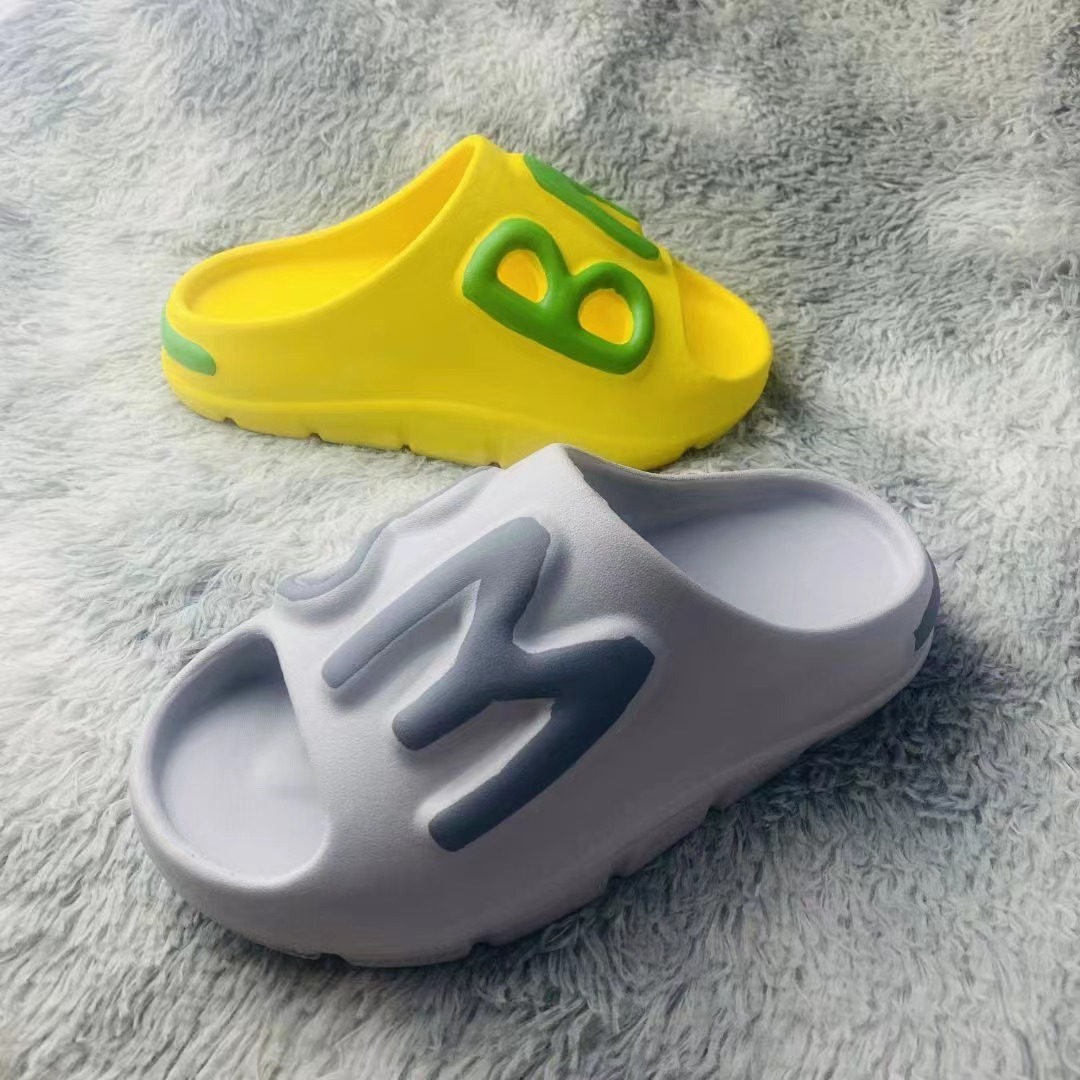
Material choice is the single most consequential variable in clog performance. It affects weight, breathability, cleanability, environmental footprint, and how the shoe responds to foot shape over time. The four dominant material categories in 2026 are EVA foam, natural cork/leather, thermoplastic rubber (TPR), and polyurethane (PU).
EVA foam: lightweight but limited
EVA foam dominates the garden clogs and casual slip-on shoes segment. Its near-zero water absorption makes it the go-to material for wet outdoor environments, and its low weight (under 230 g per shoe in EU 38) reduces fatigue during light activity. The limitation is structural: EVA compresses under repeated load and loses roughly 15–20% of its cushioning capacity after 400 hours of use, based on material fatigue data from footwear engineering literature. For daily professional wear, this means a typical pair lasts around six to eight months before the footbed loses meaningful support.
Cork and leather: the high-investment benchmark
Cork-and-leather construction remains the technical benchmark for orthopedic clogs and comfort clogs used in professional settings. Cork's cellular structure molds progressively to the wearer's foot outline over the first 30–50 hours of wear, creating a custom-like footbed profile. The arch support height in well-designed cork footbeds typically ranges from 8–14 mm — significantly higher than EVA or PU alternatives. The trade-off is weight (up to 450 g per shoe) and moisture sensitivity: untreated cork will degrade if exposed to standing water repeatedly.
"The biomechanical advantages of contoured cork footbeds are well established in occupational health literature. Workers in prolonged standing roles who transitioned to cork-soled footwear reported statistically significant reductions in lower back and knee pain over a 12-week observation period." — Occupational Footwear Ergonomics Review, 2024
Matching clogs to foot type: a compatibility guide
Foot type compatibility is the most systematically under-covered dimension in women's clog guides — and the most consequential for long-term wearability. The right material and brand become irrelevant if the last width, arch profile, or toe box geometry does not match the buyer's foot anatomy.
Wide feet
Wide-footed wearers (foot width above 9.5 cm at the ball for EU 38) need clogs with a wide or extra-wide last. Standard-width lasts in many European and Asian-manufactured models create lateral compression at the metatarsal heads, which accelerates forefoot fatigue. Look for models explicitly labeled "wide fit" or carrying a "W" or "EW" width designation. Birkenstock, as a reference point, offers both regular and narrow lasts — but their regular last already runs approximately 2–3 mm wider than the EU industry average, making it a suitable starting point for mildly wide feet without requiring an explicit wide-fit model.
High instep and bunions
High-instep feet require a generous upper volume — the vertical clearance between the footbed and the strap or toe box ceiling. Many foam clogs and women's mules have a fixed upper geometry that cannot accommodate instep heights above roughly 55 mm, causing pressure points across the top of the foot within 30–60 minutes of wear. For bunion sufferers (hallux valgus), the critical measurement is the width at the first metatarsophalangeal joint. A toe box that narrows before the ball of the foot will compress the bunion and cause pain regardless of overall shoe width. Open-toe platform clogs or models with a wide, rounded toe box consistently perform better for this foot type.
Flat feet and plantar fasciitis
Flat-footed wearers and those managing plantar fasciitis require specific arch support geometry — not just cushioning. A deep heel cup (minimum 18–22 mm depth) combined with a longitudinal arch support profile is clinically associated with reduced plantar fascia strain during prolonged standing. Of course, individual responses vary, and persistent foot pain warrants consultation with a podiatrist. EVA foam clogs with a flat footbed are generally contraindicated for active plantar fasciitis; cork or dual-density PU footbeds with built-in arch contours are the more appropriate category.
Cross-brand sizing and fit reality
Sizing inconsistency across clog brands is a legitimate and persistent problem. Actual internal shoe length (the measurable space inside the shoe from heel counter to toe box) varies by as much as 12 mm between brands nominally offering the same EU size. This is not a quality defect — it reflects deliberate last design philosophy — but it creates real purchasing problems, especially for online buyers in Germany who rely on return policies.
Sizing run data: does it run large or small?
Based on aggregated fit feedback and published last specifications:
- Models with cork/leather construction (e.g., the Birkenstock category): Run true to size in length but narrow in standard last. Wide-footed buyers typically need the regular last one half-size up, or should select the wide-fit last in their actual size.
- EVA foam garden clogs and casual models: Consistently run 0.5–1 full EU size large due to the lack of a structured heel counter. Standard advice is to size down half a step and verify the internal length specification before purchasing.
- Professional nursing clogs (closed-heel, PU or TPR sole): Tend to run true to size in length but can be narrow in the forefoot. If the foot width exceeds 9 cm at EU 38, check whether a wide-fit option is available before ordering.
- Platform clogs with elevated heel: Often size true in length but may feel tight in the toe box due to the angled last geometry. Try on in-store when possible, or order two adjacent sizes if purchasing online.
- Fashion-forward clogs sandals and open-toe styles: Variable by brand. Internal length specifications from the manufacturer's size chart are the most reliable reference point.
How to verify internal length before buying
The most reliable method: place your foot on a sheet of paper, trace the outline, and measure heel-to-longest-toe in millimeters. Add 10–12 mm for a functional fit allowance. Compare this total to the manufacturer's published internal shoe length (Innenlänge), not the EU size label. When these figures are unavailable — as they often are on third-party marketplaces — contact the seller directly or rely only on retailers who publish this specification.
Intended use scenarios: nursing, garden, kitchen, and casual
The same pair of clogs für damen that excels in one use context can underperform significantly in another. Intended use should be treated as a primary filter, not an afterthought.
Nursing and medical environments
Nursing clogs need to satisfy a specific set of overlapping requirements: closed heel for rapid movement safety, slip-resistant outsole certified to EN ISO 20347 or equivalent, easy cleanability (ideally fully washable or wipeable), and sufficient arch support for 8–12 hour shifts. Waterproof clogs with an antimicrobial lining are increasingly standard in German clinical environments as of 2026. Actual testing in ward settings confirms that models with a mild rocker sole reduce reported lower limb fatigue compared to flat-soled alternatives after shifts exceeding six hours.
Kitchen and food service
Professional kitchen use adds oil-resistance and toe protection to the nursing checklist. The outsole must resist both water and lipid-based contaminants — a distinction that matters because many waterproof clogs are tested only against water. Oil-resistant TPR or nitrile-rubber outsoles provide meaningfully better grip on greasy kitchen floors than standard EVA. Some professional kitchen models also incorporate a steel or composite toe cap, technically moving them into the safety footwear category — worth checking if the work environment requires EN ISO 20346 toe-protection certification.
Garden and outdoor casual use
Garden clogs are dominated by EVA foam and waterproof rubber constructions. The priorities here are water resistance, easy hosing-off, and lightweight wearability for light outdoor activity. Just like a good rain jacket trades breathability for weather protection, garden clogs trade structured support for environmental resilience. For wearers who spend more than 90 minutes at a time in garden footwear, adding an aftermarket arch-support insole to a standard garden clog meaningfully reduces midfoot fatigue — a practical workaround for the inherently flat footbed of most EVA models.
Casual daily wear and commuting in Germany
For everyday urban use — commuting in German cities, running errands, light office environments — the dominant demand is a balance between aesthetics and all-day wearability. Platform clogs and women's mules with a low-to-medium heel height (3–5 cm) work well on flat urban surfaces but perform poorly on cobblestones or uneven terrain. Pairing clogs with chunky socks has been a consistent styling choice in German street fashion through 2025 and into 2026, with ankle socks in ribbed cotton or wool blends complementing both slip-on clogs and casual leather uppers. Seasonally, closed-toe leather clogs transition well into autumn and mild winter use with wool socks; open designs are best reserved for April through September.
Sustainability, material safety, and repairability
Material safety and sustainability have become active purchase criteria for a growing share of German consumers — and they are areas where the clog category shows genuine variation that is rarely communicated clearly.
PAK and plasticizer concerns in synthetic uppers
Polycyclic aromatic hydrocarbons (PAK) and plasticizers (including phthalates) have historically been a concern in cheaply produced PVC and synthetic rubber footwear. The EU's REACH regulation restricts PAK concentrations in rubber and plastic components that come into skin contact; compliant products should carry documentation confirming REACH conformity. When purchasing clogs with synthetic uppers or linings from lesser-known suppliers, specifically requesting REACH compliance documentation is a reasonable precaution.
Vegan and recycled-material options
The 2026 market offers a meaningfully wider range of vegan clogs für damen than was available even three years ago. Cork remains naturally vegan; the variable is the upper and strap material, which in traditional models uses leather. Synthetic microfibre uppers (commonly labeled as "vegan leather" or by trade names) have improved significantly in breathability and durability. Fully recycled EVA options — where the foam compound incorporates post-industrial or post-consumer EVA waste — are now available from several European brands, with recycled content percentages verifiable via manufacturer documentation.
Resoling and long-term repairability
Cork-and-leather clogs are, in principle, resole-able — the cork footbed can be replaced, and the outsole can be rebonded by a qualified cobbler. This extends the functional life of a quality pair from roughly three to four years to six or more years, dramatically improving the cost-per-wear calculation. EVA foam and injection-molded one-piece designs are not resole-able by conventional means; when the sole compresses past functional threshold, the shoe is replaced rather than repaired. For buyers prioritizing long-term value and reduced material waste, the higher upfront cost of a resole-able cork construction is justified by the extended service life.
Care, waterproofing, and seasonal use
Incorrect care is the primary cause of premature deterioration in cork and leather clogs. The process is straightforward once understood — but it differs substantially between material categories.
Cork and suede care step-by-step
- Remove surface dirt with a soft brush before any liquid contact. For suede uppers, brush in one direction with a suede brush to restore the nap.
- Apply cork sealant to the exposed cork midsole every three to four months, or more frequently if the shoe is used in damp conditions. Cork sealant prevents moisture penetration and crumbling at the edges.
- Condition leather straps and uppers with a leather conditioner (beeswax-based or lanolin-based) every 6–8 weeks of regular use. This prevents cracking and preserves flexibility.
- Apply waterproofing spray to suede uppers before first use and after each cleaning cycle. Fluorocarbon-free formulations are now widely available and perform comparably to older fluorinated versions.
- Dry naturally away from direct heat. Heat sources — radiators, direct sun — accelerate cork delamination and leather stiffening.
Rain, winter, and cold-weather use
Open-heel clogs are genuinely unsuitable for heavy rain or temperatures below 5°C without modification. The heel gap allows water ingress, and the foot loses heat rapidly through the open upper. For autumn and winter use, the practical options are: switching to a closed-heel model, layering with wool socks (which retain warmth even when damp), or reserving open clogs for indoor and covered outdoor environments. Fully waterproof clogs in TPR or EVA naturally handle wet conditions, but their insulating properties are minimal — thermal insoles are a worthwhile addition for cold-weather use in German winters.
Frequently asked questions
Q: What is the difference between clogs für damen and women's mules?
A: Clogs für damen are defined by a rigid or semi-rigid sole — traditionally wood, now also cork, EVA, or TPR — that holds its shape independently of the upper. Women's mules share the slip-on, backless silhouette but typically have a flexible sole. The structural sole is what gives clogs their distinctive foot-support and load-distribution properties.
Q: Are clogs für damen suitable for wide feet?
A: Yes, but model selection matters. Look for wide-last designations (W or EW) or brands whose standard last is known to run wide. Standard-width lasts in many clog models measure approximately 88–92 mm at the ball for EU 38; a wide last typically adds 4–6 mm. If in doubt, measure your foot width and compare it against the manufacturer's last width specification.
Q: How long do women's clogs typically last?
A: Lifespan depends heavily on material and use intensity. EVA foam clogs used daily typically last 300–500 hours before significant cushioning loss. Cork-and-leather models used in professional settings last 800–1,200 hours under comparable conditions and can be extended further through resoling. Cost-per-wear for quality cork models is competitive with cheaper alternatives over a 3–4 year horizon.
Q: Can I wear clogs für damen in winter in Germany?
A: Closed-heel models with a leather or synthetic upper work well through autumn and mild German winters when paired with wool or thermal socks. Open-heel and open-toe styles are not recommended below 5°C or in heavy rain without waterproof treatment. Fully enclosed TPR or waterproof rubber clogs are the most weather-resilient option for year-round outdoor use.
Q: Are vegan clogs für damen as durable as leather versions?
A: Modern microfibre and synthetic upper materials have closed the durability gap significantly by 2026. High-quality vegan uppers now achieve comparable abrasion resistance to full-grain leather in independent testing, though they generally breathe less efficiently. Cork footbeds remain naturally vegan; the main trade-off in vegan models is typically breathability and long-term mold resistance of the lining rather than structural durability.
Ultimately, selecting the right clogs für damen comes down to treating material, fit, and use case as a connected system rather than independent variables. A lightweight EVA garden clog and a cork-soled orthopedic nursing clog both qualify as "women's clogs" — but they address entirely different physical demands. Matching the construction to your actual foot anatomy and daily environment is what separates a genuinely comfortable long-term purchase from a pair that feels right in the shop and disappointing by week three.
Keyword:
Latest News


Contact Us
Tel: +86-595-87327308
Phone/Wechat/WhatsApp: +86-13860772709
E-mail: cathy@qzbmshoes.com
Address:
#1 Building, No.511th Dai Shang, Lian Dai Village, BaiQi Hui Township, Taiwan Investment Zone, Quanzhou City, FuJian Province, China


